






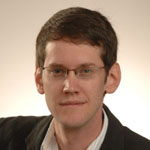
I recently completed my doctoral dissertation in philosophy (abstracts) at the University of Illinois, Urbana-Champaign. I specialize in epistemology. I am currently a lecturer at Loyola University in Chicago. I am on the job market!Personal stuff

Job search materials
Basics

  • CV (DOC) (HTML) (PDF)
  • Dissertation abstracts (DOC) (HTML) (PDF)
  • Writing sample ("Quine's Acquiescence in Skepticism"; see abstracts below) (DOC) (PDF)

Teaching portfolio

Dissertation

The varieties of naturalized epistemology: criticisms and alternatives
(July 11, 2007) (DOC) (PDF)

Online papers

Quine's Acquiescence in Skepticism
(November 1, 2007) (DOC) (PDF)
I examine a series of criticisms that have been leveled against Quine's naturalized epistemology, regarding its confrontation with the problem of skepticism. Barry Stroud and Michael Williams, assuming that Quine wishes to refute skepticism, argue that Quine not only fails to undertake this refuation, but is also committed to theses (such as the inscrutability of reference and the underdetermination of theory by evidence) which imply versions of skepticism of their own. In Quine's defense, Roger Gibson argues that Quine can succeed in showing skeptical doubts to be incoherent. But I contend that both parties of this dispute wrongly assume that Quine wishes to defeat the skeptic. Instead, Quine is happy to "acquiesce" in skepticism. No logical justification of our scientific beliefs is possible on his view. But pragmatic justification is possible, and acknowledging that this is his view this leads to the resolution of a number of interpretive quandaries.

How Not to Refute Quine: Evaluating Kim's Alternatives to Naturalized Epistemology (Southern Journal of Philosophy, December 2007)
(August 6, 2007) (DOC) (PDF)
This paper offers an interpretation of Quine's naturalized epistemology through the lens of Jaegwon Kim's influential critique of the same. Kim argues that Quine forces a false choice between traditional deductivist foundationalism and naturalized epistemology, and contends that there are viable alternative epistemological projects. However it is urged that Quine would reject these alternatives by reference to the same fundamental principles (underdetermination, indeterminacy of translation, extensionalism) that led him to reject traditional epistemology and propose naturalism as an alternative. Given this interpretation of Quine, it is essential that a successful critic of naturalism also critique Quine's aforementioned principles. The divide between naturalist and non-naturalist epistemology turns out to be defined by the divide between more fundamental naturalist and non-naturalist approaches to semantics.

From folk psychology to folk epistemology: the status of radical simulation
(June 6, 2007) (DOC) (PDF) In this paper I consider one of the leading philosophic-psychological theories of "folk psychology," the simulation theory of Robert Gordon. According to Gordon, we attribute mental states to others not by representing those states or by applying the generalizations of theory, but by imagining ourselves in the position of a target to be interpreted and exploiting our own decision-making skills to make assertions which we then attribute to others as 'beliefs'. I describe a leading objection to Gordon's theory—the problem of adjustment—and show how a charitably interpreted Gordon could answer this objection. I conclude, however, that the best case for Gordon's position still runs into a new problem concerning basic folk epistemological knowledge. Identifying this new alternative helps undermine the simplicity of a theory based on simulation-based explanation.

CV (Updated Spring 2008)

(DOC) (HTML) (PDF)


. . . . .